



You May Be Wasting Money on Collagen Drinks
The beauty industry has turned collagen into a multibillion-dollar ritual. A major new analysis asks whether the promised glow survives once commercial funding and study quality are examined.
Open a beauty influencer’s refrigerator and you may find something more carefully arranged than champagne: miniature collagen shots, pastel sachets and premium powders promising firmer, smoother and more hydrated skin.
Collagen has become the perfect beauty product for the wellness era. It is ingestible, photogenic and easy to incorporate into a morning routine. Unlike a clinical procedure, it requires no downtime. Unlike prescription skincare, it feels gentle and natural. The message is seductively simple: drink collagen and replenish what ageing takes away.
Consumers have responded enthusiastically. Commercial estimates place the global collagen supplement market somewhere between approximately US$1.8 billion and US$3.4 billion in 2025, depending on which products and sales channels are counted. Some forecasts expect the category to continue expanding throughout the next decade.
That commercial success, however, is running ahead of scientific certainty.
A systematic review and meta-analysis published in The American Journal of Medicine in 2025 has delivered one of the strongest challenges yet to the collagen-beauty narrative. After analysing 23 randomised controlled trials involving 1,474 participants, the researchers concluded that there was currently no reliable clinical evidence supporting collagen supplementation for preventing or treating skin ageing.[1]
The provocative part was not that every trial produced a negative result. In fact, the combined analysis initially appeared encouraging.
When all 23 trials were pooled, collagen supplementation was associated with improvements in skin hydration, elasticity and wrinkles. That sounds like precisely the result appearing on countless product pages.
But the picture changed when the researchers looked more closely at who funded the studies and how well they were conducted.
The results changed when funding was considered
Studies receiving pharmaceutical industry funding reported significant improvements in hydration, elasticity and wrinkles. Studies without such funding did not demonstrate significant benefits in any of those categories.
A similar divide appeared when trials were separated according to methodological quality. Higher quality studies found no significant benefit, while lower-quality trials reported an improvement in elasticity.
That distinction matters because a meta analysis cannot automatically correct weaknesses in the studies it combines. Pooling several small or biased trials can produce a statistically impressive result without necessarily producing a clinically trustworthy one.
Industry funding does not prove that a study is dishonest. Pharmaceutical, nutraceutical and cosmetic companies frequently fund research because they manufacture the products being tested. Without commercial support, many trials might never occur.
Nevertheless, funding can influence study design, choice of comparator, outcome selection, statistical analysis and publication. Positive studies may also be more likely to reach publication than trials finding no benefit. Funding source is therefore not a minor administrative detail. It is part of the evidence consumers and clinicians must evaluate.
The 2025 review is important because it asks a more useful question than simply, “Did the pooled result reach statistical significance?”
It asks: Does the apparent benefit remain when we focus on the most independent and scientifically robust evidence?
In this analysis, it did not.
Why the collagen story sounds so convincing
Collagen is genuinely essential to skin. It is a major structural protein that contributes to the strength and organisation of the dermis. Ageing, ultraviolet radiation and other environmental factors affect collagen production and accelerate its degradation.
The marketing leap occurs when this biological fact is transformed into a product claim: because skin contains collagen, consuming collagen must directly replace it.
Human digestion is not quite so beautifully packaged.
Collagen consumed in a drink or powder is broken down into amino acids and small peptides. These may be absorbed and used by the body, but they do not travel intact from the glass to a wrinkle beside the eye. The body determines how those components are distributed among skin, muscles, bones, tendons and numerous other tissues.
Laboratory and mechanistic research has suggested that certain collagen-derived peptides might influence fibroblast activity and collagen synthesis. That makes the concept biologically plausible. Plausibility, however, is not the same as demonstrating a visible and clinically meaningful improvement in independently funded human trials.
It is also possible that a study can identify a small change using an instrument without participants noticing a meaningful difference in the mirror. A statistically significant rise in measured hydration or elasticity does not necessarily translate into visibly younger skin.
Earlier research appeared more optimistic
The scientific history of oral collagen has not been uniformly negative.
Earlier systematic reviews reported improvements in skin hydration, elasticity and wrinkles after hydrolysed collagen supplementation. A 2023 meta analysis, for example, combined 26 randomised trials involving 1,721 participants and found significant improvements in hydration and elasticity.[2] (NO FACE has reached out to the author of the review published on The American Journal of Medicine to provide comments on this contradicting meta analysis, and will update the audience on the comments.)
These findings helped legitimise the category and were repeatedly used to support the concept of beauty from within.
The new analysis does not claim that those measurements never occurred. Instead, it argues that the apparent benefits may depend heavily on commercially funded or lower-quality evidence.
This is an important difference. The conclusion is not that collagen drinks have been proved incapable of producing any biological effect in any person. It is that the current evidence is not sufficiently independent and rigorous to justify confident anti-ageing claims.
Longer, larger and independently funded trials could still identify a modest benefit for particular collagen peptides, doses or populations. At present, however, consumers are often paying premium prices for certainty that the literature has not earned.
The business of selling hope in a bottle
Collagen’s commercial appeal extends beyond its active ingredient.
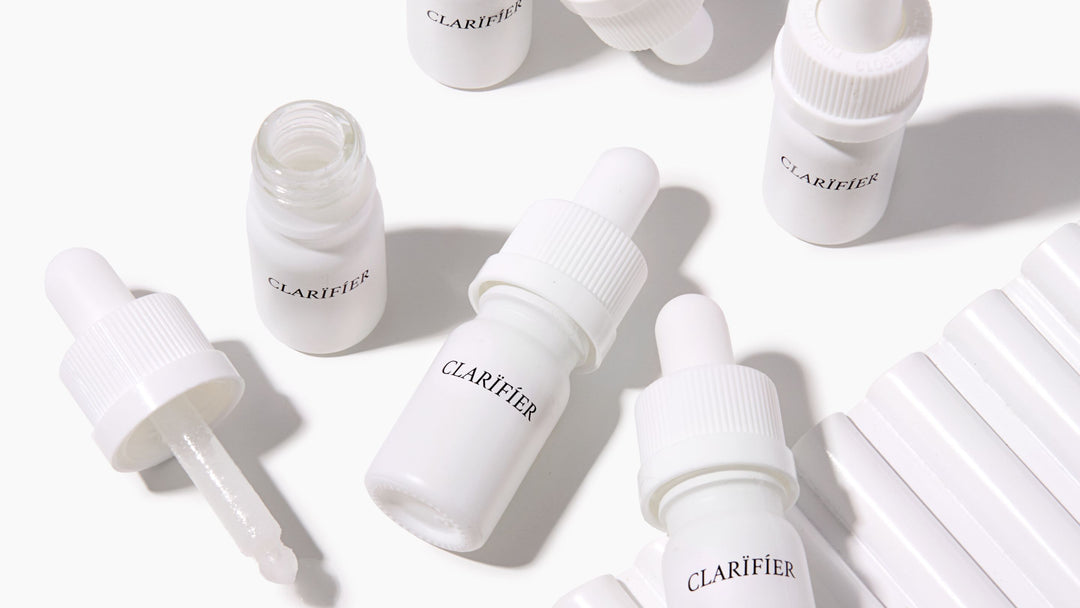
Brands are selling convenience, aspiration and ritual. Products arrive in blush-toned boxes, glass ampoules and individual sachets designed to feel more luxurious than ordinary dietary protein. Marine collagen may be positioned as refined and beauty-specific, while bovine peptides are promoted through language about purity, pasture raising and strength.
Some formulas add vitamin C, hyaluronic acid, biotin, antioxidants or botanical extracts. These combinations make it difficult to determine whether any reported effect comes from collagen, another ingredient, improved general nutrition or simply normal variation in the skin.
The format also affects perceived value. A ready-to-drink “beauty shot” can command considerably more per gram than an unflavoured collagen powder, even when both provide similar hydrolysed proteins.
From a business perspective, recurring consumption is especially attractive. Consumers are commonly told that results require daily use for eight to twelve weeks and will diminish after supplementation stops. This creates a subscription-friendly product with no obvious completion point.
For an individual consumer, a seemingly manageable daily expense can become hundreds or even thousands of dollars over several years. The relevant question is therefore not merely whether collagen is safe or pleasant to drink. It is whether the expected skin benefit justifies the cumulative cost.
Are collagen drinks completely useless?
That conclusion would go further than the evidence permits.
Collagen products provide protein and amino acids. They may be convenient for someone whose overall protein intake is inadequate, although collagen is not nutritionally equivalent to a complete protein source. Research is also investigating collagen in relation to joints, tendons, bones and exercise recovery. Evidence concerning those outcomes should be assessed separately from claims about wrinkles.
Some people may genuinely report stronger nails, improved comfort or better-looking skin while taking collagen. Personal experience matters to the individual, but it cannot establish causation. Hydration, seasonal changes, hormonal fluctuations, skincare, sleep, dietary changes and expectations can all influence perceived results.
For healthy consumers who enjoy a collagen drink, can afford it and understand the uncertainty, continuing it is a personal choice. The problem begins when a food supplement is presented as though it were a clinically established treatment for skin ageing.
Where your beauty budget has stronger evidence
For consumers deciding where to direct limited time and money, photoprotection remains the more defensible priority. Ultraviolet exposure is a major driver of premature skin ageing, and dermatology guidance consistently places broad-spectrum sunscreen at the foundation of an anti-ageing routine.[3]
Retinoids also have a substantially stronger clinical foundation for improving fine lines, uneven pigmentation and other features of photoageing, although they must be introduced carefully because irritation is common.[4]
A practical evidence-led routine does not need to be glamorous:
Protect: Use broad-spectrum, water-resistant SPF 30 or higher, together with shade and protective clothing.
Support: Use a suitable moisturiser to improve barrier function and temporarily reduce the appearance of fine dehydration lines.
Treat: Consider a retinoid or other evidence-based treatment appropriate for your skin, ideally with professional guidance when sensitivity, pigmentation disorders or dermatological conditions are present.
Nourish: Consume adequate dietary protein and a varied diet rather than assuming that one branded peptide will compensate for poor nutrition.
Avoid acceleration: Smoking and excessive ultraviolet exposure can undermine far more collagen than a beauty drink has been shown to restore.
These measures are less novel than a luminous bottle promising transformation from within. They are also supported by a more mature body of evidence.
What to look for before buying collagen
Consumers who still choose to purchase collagen should approach the label as critically as they would approach a skincare ingredient list.
Look for a clearly disclosed dose rather than a proprietary blend. Check whether the product was tested as an entire formulation or whether the company is borrowing evidence from a different collagen ingredient.
Most importantly, check who funded the trial and whether the claimed improvement was large enough to be visible or meaningful.
“Clinically tested” does not necessarily mean clinically effective. It may mean only that a product or related ingredient appeared in a study. “Statistically significant” does not mean dramatic. A before-and-after photograph taken under different lighting is not a substitute for controlled evidence.
Those distinctions are not anti-beauty or anti-business. They are what responsible beauty communication should look like.
Bottom line.....
Collagen drinks are unlikely to disappear from beauty shelves. They are too aligned with the modern appetite for wellness rituals, preventative ageing and premium convenience.
Yet the 2025 meta-analysis changes the conversation. When all trials were pooled, the category looked promising. When commercial funding and study quality were examined, the benefit was no longer convincing.
That does not make every collagen drink fraudulent, nor does it prove that no consumer could experience a modest effect. It means the most confident marketing statements are stronger than the independent clinical evidence currently supporting them.
Before investing in another monthly box of beauty shots, ask what you are actually purchasing: demonstrated rejuvenation, a convenient source of peptides, or an elegant ritual built around an appealing scientific story.
The answer may determine whether your collagen drink is a worthwhile personal luxury—or simply an expensive sip of hope.
Article Research foundation
[1] Principal study:
-
Effects of Collagen Supplements on Skin Aging: A Systematic Review and Meta-Analysis of Randomized Controlled Trials
Myung and Park analysed 23 randomised controlled trials and found that the pooled improvements disappeared in non-industry-funded studies; higher-quality trials also found no significant benefit across the evaluated skin outcomes.
[2] Contrasting earlier evidence: A 2023 systematic review and meta-analysis of 26 trials reported improvements in hydration and elasticity, illustrating why the literature previously appeared favourable and why the funding and quality analysis is consequential.
[3] Market context: Published commercial estimates place the 2025 collagen-supplement market at approximately US$1.8 billion to US$3.43 billion. The variation reflects differences in market definitions and should not be disguised as a single definitive sales figure.
[4] Evidence-led skincare: The American Academy of Dermatology identifies daily broad-spectrum SPF 30 or higher as foundational to preventing premature skin ageing and recognises retinoids as an option for fine lines and pigmentation irregularities.
Consumer safety note: Australian Healthdirect advises that most people can obtain required nutrients through a balanced diet and that supplements can still produce allergic reactions or other adverse effects.
References
American Academy of Dermatology Association (2021) ‘Retinoid or retinol?’, American Academy of Dermatology Association.
American Academy of Dermatology Association (n.d.) ‘Anti-aging skin care’, American Academy of Dermatology Association.
Future Market Insights (2026) ‘Collagen supplement market size, share and forecast to 2036’, Future Market Insights.
Mordor Intelligence (2026) ‘Collagen supplements market size and share analysis: growth trends and forecasts’, Mordor Intelligence.
Myung, S.K. and Park, Y. (2025) ‘Effects of collagen supplements on skin aging: a systematic review and meta-analysis of randomized controlled trials’, The American Journal of Medicine, 138(9), pp. 1264–1277.
Pu, S.Y., Huang, Y.L., Pu, C.M., Kang, Y.N., Hoang, K.D., Chen, K.H. and Chen, C. (2023) ‘Effects of oral collagen for skin anti-aging: a systematic review and meta-analysis’, Nutrients, 15(9), 2080.


Leave a comment